|
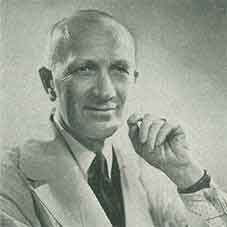
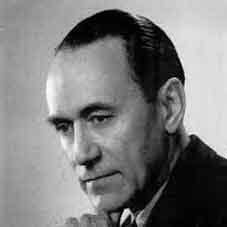
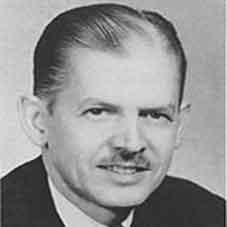
Dr. Wilder Penfield, along with his fellow researchers Dr. Edwin Boldrey and Dr. Theodore Rasmussen, are recognized as the creators of the Sensory and Motor Homunculi. Although they weren't the first to attempt to objectify human brain function through the form of a Homunculus, they were the first to distinguish between sensory and motor functions and to independently and distinctly map these two functions, resulting in two very different looking Homunculi.
Dr. Penfield initially conceived of his Homunculi as part of a thought experiment, even going so far as to imagine a world in which these miniature figures lived, he referred to this as "the world of if", the world of cognitive possibilities. |
|
Subsequently, he and his colleagues conducted experiments involving electrical stimulation on the brains of patients undergoing open brain surgery. Their pioneering work in this field has made significant contributions to our understanding of epilepsy control.
Furthermore, their drawings and research have given rise to some of the most renowned conceptual maps in modern neuroscience. Dr. Penfield's topographical brain maps have not only enhanced our knowledge of human brain function but have also had a profoundly positive impact on the lives of countless individuals around the world.
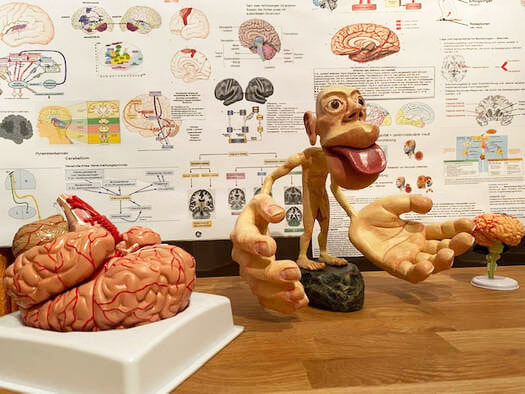
It's important to note that a homunculus must be produced exactly according to the mathematical consequences discovered by Dr. Penfield. A homunculus is a 3D representation of the brain-body connection as such the ratios cannot be guessed or copied. Instead, they must exactly represent Dr. Penfield magic ratio's.
Furthermore, their drawings and research have given rise to some of the most renowned conceptual maps in modern neuroscience. Dr. Penfield's topographical brain maps have not only enhanced our knowledge of human brain function but have also had a profoundly positive impact on the lives of countless individuals around the world.
It's important to note that a homunculus must be produced exactly according to the mathematical consequences discovered by Dr. Penfield. A homunculus is a 3D representation of the brain-body connection as such the ratios cannot be guessed or copied. Instead, they must exactly represent Dr. Penfield magic ratio's.

"He's fantastic. The detail is amazing and the quality impeccable".
Suna
Suna